

AI-powered mobility operations: advancing efficiency and governance in urban transport
The World Economic Forum's white paper on transportation highlights artificial intelligence is becoming essential for managing the growing complexity of global and urban mobility networks. AI-powered systems are increasingly able to process vast volumes of operational and logistics data, enabling more efficient coordination across transport modes while supporting decarbonisation goals.
According to the report ¨Intelligent Transport, Greener Future”, through enabling dynamic decision-making and better coordination across transport modes, AI helps reduce inefficiencies, particularly in first- and last-mile operations, while supporting more consistent, data-driven emissions reduction strategies. These developments underline the importance of placing AI-enabled innovation at the centre of tomorrow’s mobility landscape. Especially, with support from AI, the freight logistics sector could potentially reduce its emissions by 10-15%, while increasing both efficiency and service levels.
Emerging operational platforms in AI-enabled mobility
In this escalating landscape, new operational platforms are emerging to help organisations translate AI capabilities into practical mobility management tools. One such example is Letty, which provides an AI-enabled mobility operations platform designed to support the modernisation of organisational mobility systems.
Based in Luxembourg and Norway, the platform offers web- and app-based tools that enable operational oversight across vehicles, users, access and mobility policies. Designed to be MaaS-ready, the system can be deployed either as a full end-to-end solution or through modular components, allowing municipalities, public agencies, corporates and fleet operators to digitise and coordinate mobility operations according to their specific needs.
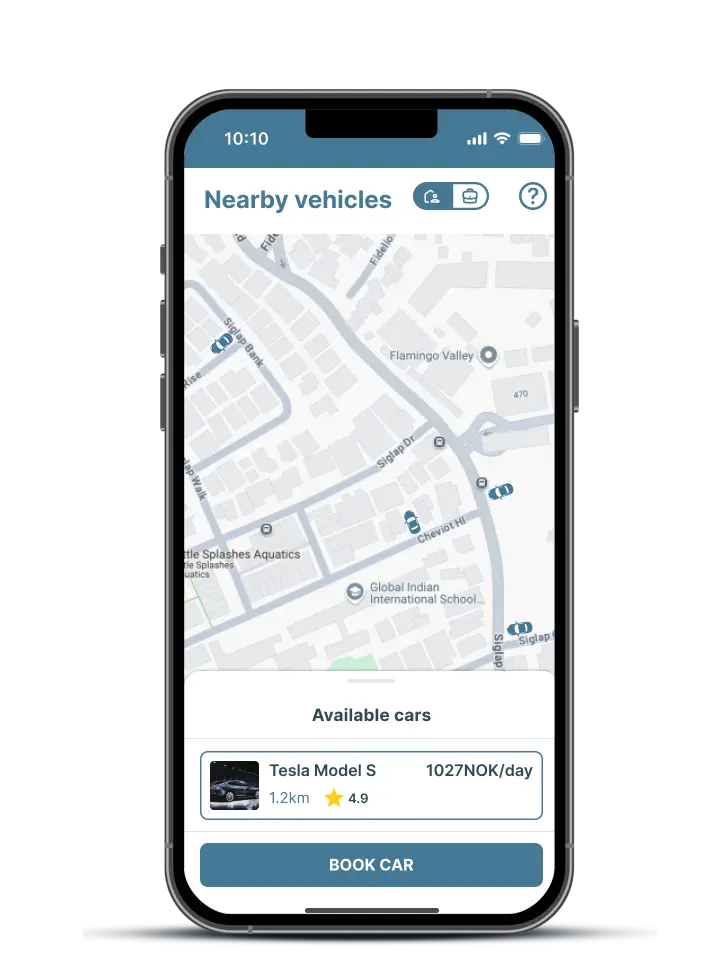 By replacing fragmented manual processes with integrated digital workflows, AI-enabled operational platforms can help organisations improve transparency, strengthen governance and enhance day-to-day efficiency. Capabilities such as utilisation insights, standardised workflows and emissions-related reporting contribute to more measurable and accountable mobility operations.
Waldo Taylor, CEO of Letty, emphasises the strategic role of intelligent operations tools in this transition: “AI-enabled mobility tools are becoming essential infrastructure for organisations managing transport at scale. With better visibility and measurable insights, operators can improve efficiency, reduce emissions and make more informed operational decisions every day.”
Collaboration and ecosystem development
Collaborative innovation remains central to scaling AI-enabled mobility solutions. Through partnerships with EIT Urban Mobility - an initiative of the European Institute of Innovation & Technology (EIT), a body of the European Union- technology providers, cities and mobility operators are increasingly working together to test and deploy digital mobility tools in real-world settings.

Stephan Poelsma, Partner Development Officer at EIT Urban Mobility, noted: “Partnerships play a crucial role in accelerating mobility innovation. By connecting cities, industry and technology providers, we can test new solutions faster and ensure that AI-driven tools deliver tangible benefits for urban transport systems.
Such collaboration creates opportunities for pilot projects, cross-sector knowledge exchange and the development of shared standards for governance and performance measurement. It also supports the broader objective of building mobility systems that are not only technologically advanced but also transparent, scalable and aligned with sustainability goals.