
Exploring the future of urban logistics at the Mobile World Congress 2025
From 3 to 6 March, EIT Urban Mobility made its mark at the 2025 Mobile World Congress (MWC) in Barcelona, bringing insights and solutions to the forefront of smart mobility discussions. As urban areas face increasing pressure from e-commerce-driven logistics, the organisation showcased how innovative models and digital tools can drive efficiency and sustainability in last-mile delivery.
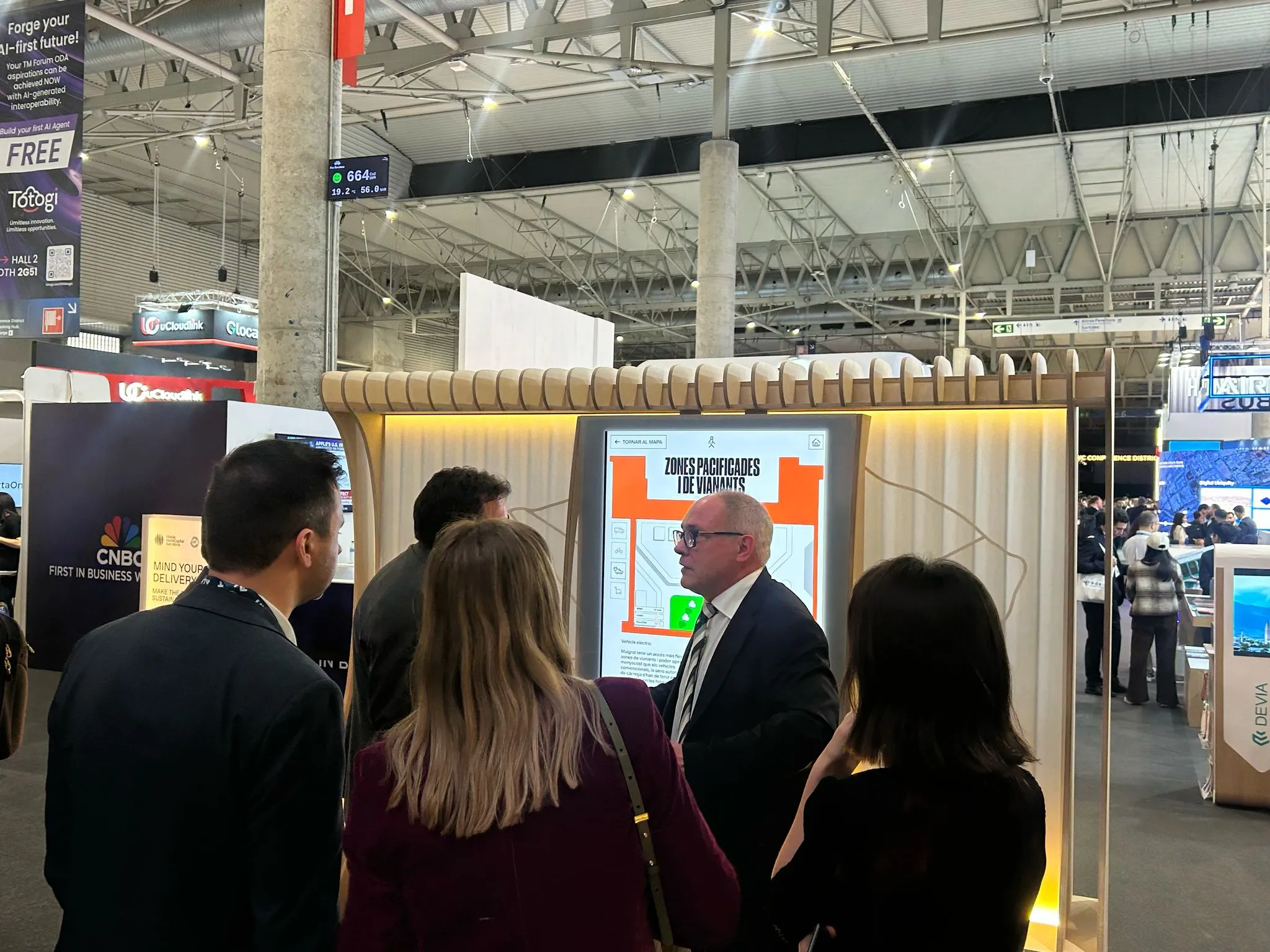
One of the highlights in mobility of this year’s MWC was the MWCapital experience, which included an interactive demonstration across six key themes. Mobility and last-mile logistics took centre stage with a digital map of Barcelona, co-designed by EIT Urban Mobility. Visitors engaged with real-time simulations illustrating how different distribution models impact traffic congestion, pollution levels, and logistics efficiency.
This immersive experience presented a range of technological solutions—from urban logistics centres and micro-platforms to electric vehicles and cargo bikes—designed to optimise last-mile distribution in low-emission and pacified zones. The display also highlighted initiatives such as Low Emission Zones, demonstrating how cities can implement strategies for cleaner, more liveable environments. Through dynamic graphics and animations, attendees compared different delivery models and assessed their sustainability and efficiency.
Beyond its interactive stand, EIT Urban Mobility contributed to the event’s thought leadership through key panel discussions. On 4 March, the organisation participated in the session Cities in Movement: Challenges and Solutions for Last-Mile Logistics, hosted at the Mobile World Capital Barcelona Foundation Booth. Martí Massot of EIT Urban Mobility's Innovation Hub South shared insights alongside Maria Savall from the Ajuntament de Barcelona and Mariola Panzuela from C40, exploring solutions for the pressing challenges of urban logistics. The discussion emphasised that while technology is crucial for optimising last-mile logistics, efficient city planning and organisation are equally essential to ensure these solutions can be effectively implemented at scale.
EIT Urban Mobility’s involvement continued on 5 March with a series of high-profile sessions:
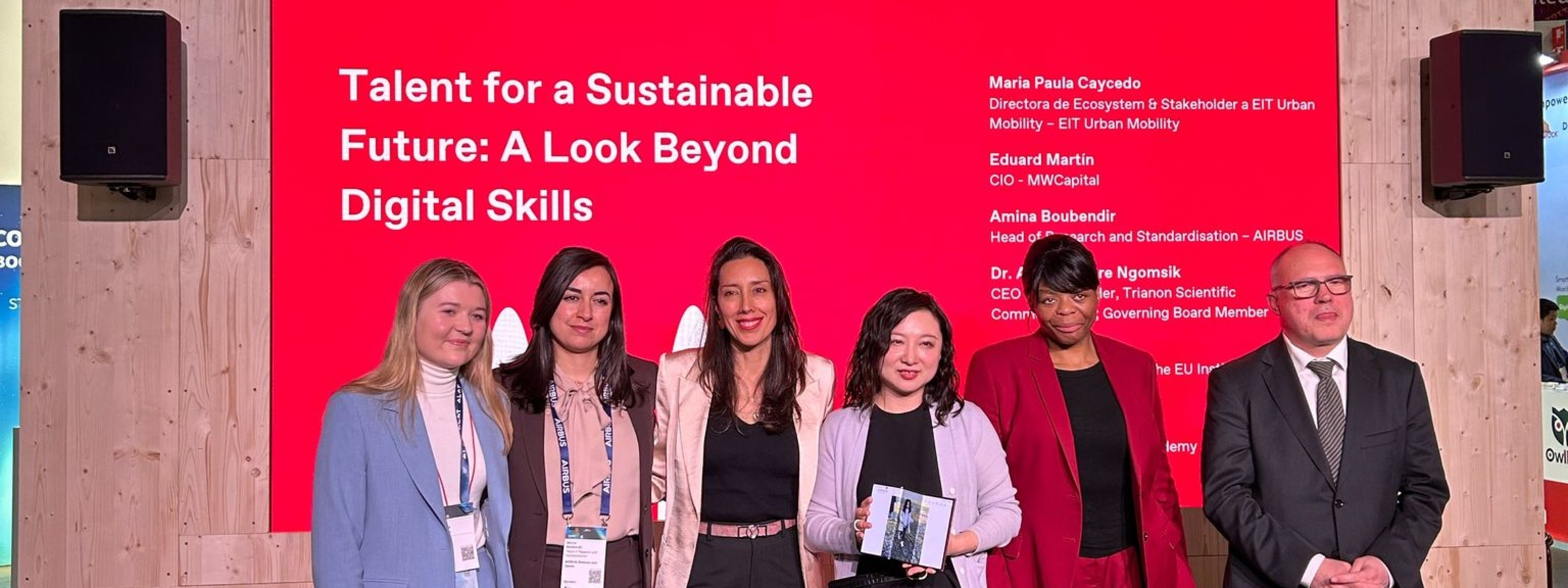
Talent for a Sustainable Future: A Look Beyond Digital Skills: María Paula Caycedo, EIT Urban Mobility's Director of Ecosystems and Stakeholders, joined a European Leadership Academy-hosted panel discussing gender inclusion in STEM and the mobility sector, alongside representatives from Airbus Defence and Space, Barclays, and Huawei. A key focus of the conversation was the role of representation as a tool for achieving broader goals. As María Paula highlighted, "the workforce has to be able to understand the challenges. To understand these challenges, we need to understand different backgrounds." The discussion also explored the importance of public-private collaboration, continuous learning, adaptability, and the development of soft skills.
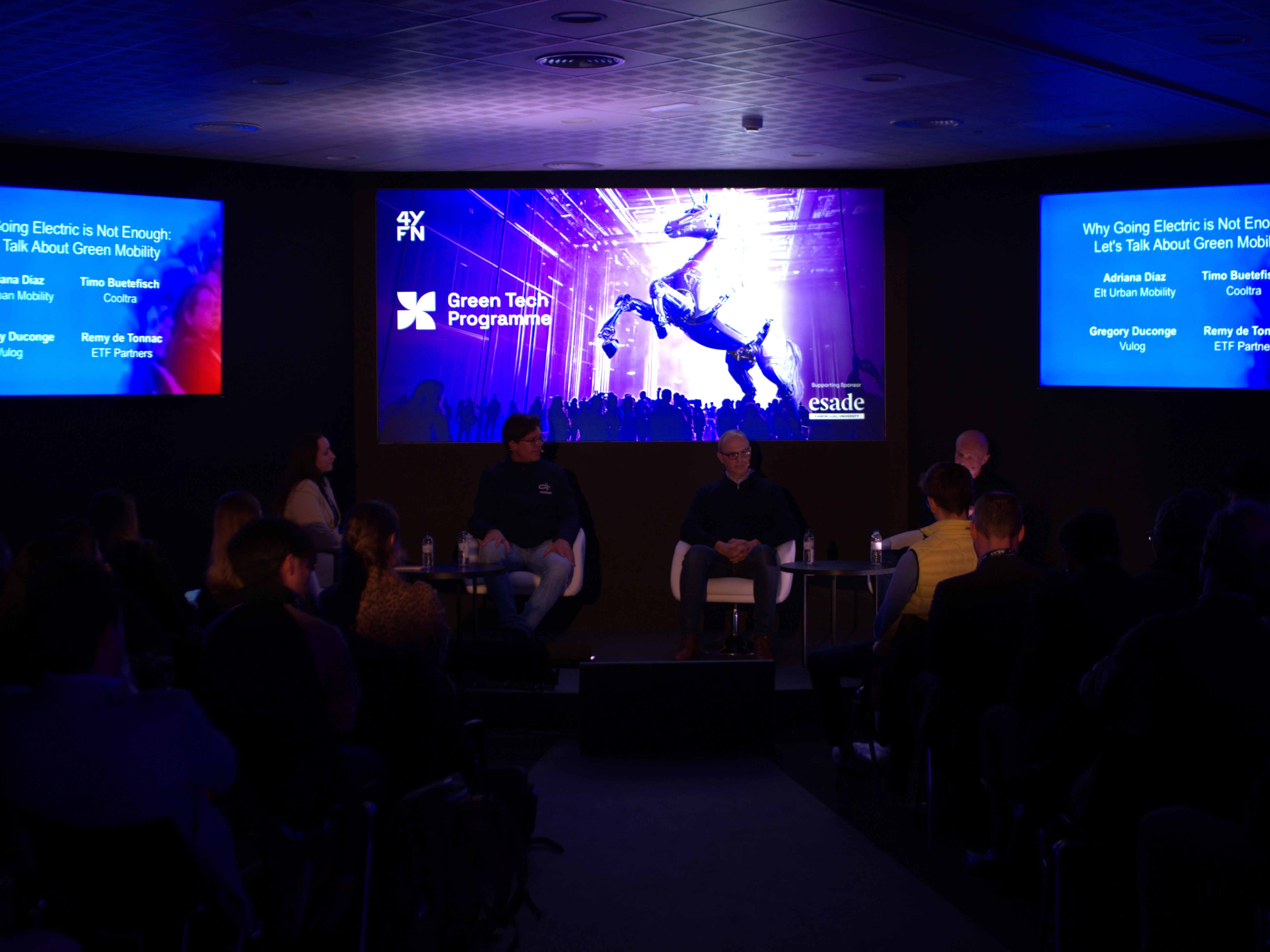
Sustainable Mobility Beyond Electrification: Adriana Diaz, EIT Urban Mobility's Director of Innovation, moderated a session on mobility innovations beyond electrification, featuring speakers from Cooltra, Vulog, and ETF Partners.
Digital Skills Networking Panel: Mireia Gilibert of EIT Urban Mobility's Innovation Hub South participated in a discussion on digital skills and technology adoption for SMEs, alongside experts from UAB, Universidad de Aveiro, UNESCO, i2CAT, and EURECAT. Mireia had the opportunity to represent EIT Urban Mobility and showcase its mission and vision to accelerate the transition to cleaner and more sustainable urban mobility in Europe. She also introduced the EIT Urban Mobility Innovation Calls Programme, explaining the different funding opportunities available and how organisations can engage with the initiative to drive innovation in urban mobility.
“At MWC, we had the opportunity to bring together diverse perspectives to confront the realities of urban congestion and environmental impact,” said María Paula Caycedo. “Collaboration between institutions isn’t just beneficial but essential if we are to tackle the urgent challenges facing our cities. Through technological innovation, we aim to contribute to more equitable and sustainable urban spaces.”
With its strong presence at MWC 2025, EIT Urban Mobility continued to lead the conversation on the future of urban logistics, ensuring that technology, policy, and sustainability align to create smarter, cleaner cities. Those who attended had the chance to explore these innovations and be part of the dialogue shaping the future of mobility.